From Our Experience to YOU!
Making the Most of Your Horse’s Neck Through Plaiting
One of the little secrets of presenting a horse to its best advantage is knowing how to use plaiting to create an optical illusion.
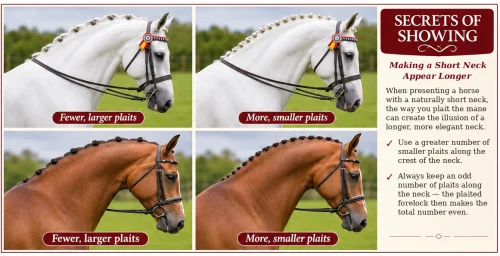
Plaiting the mane can dramatically alter the appearance of your horse’s neck. By carefully choosing the number, size and placement of the plaits, you can enhance your horse’s natural outline and create a more balanced appearance.
Making a Short Neck Appear Longer
A horse with a short, thick neck can be made to appear longer and more elegant simply by changing the number and size of the plaits.
Fewer, larger plaits can emphasise the shortness of the neck, while more numerous, smaller plaits placed closer together can help create the appearance of a longer, more refined neckline.
Creating the Appearance of a Better Topline
If your horse lacks a well-developed topline, positioning the plaits higher, so they sit along the top of the neck, can help create the appearance of greater fullness along the upper neckline.
Conversely, if your horse has a particularly pronounced crest, positioning the plaits slightly lower against the neck can help soften its appearance and make the neckline look more balanced.
These small adjustments can make a surprising difference to the overall picture presented in the show ring.
A Little Showing Tip
Traditionally, an odd number of plaits is used along the neck, with the forelock plait bringing the total to an even number. However, the number and size of the plaits should also complement your horse’s individual conformation.
Look at the accompanying illustrations and notice how different plaiting techniques can influence the appearance of the neck without changing the horse itself.
If Your Horse Has a Longer Head
The style of bridle you choose can make a surprising difference to the appearance of your horse’s head.
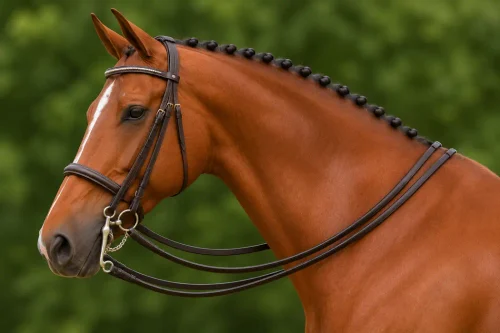
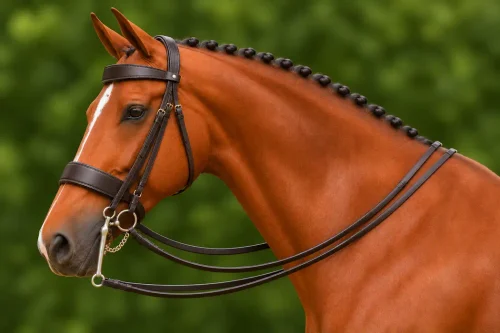
If your horse has a slightly longer head, a fine, narrow browband and noseband can emphasise its length.
Choosing a wider, flat browband and noseband can help create the illusion of a shorter, neater and more balanced head.
Compare the two illustrations. Notice how the broader leatherwork changes the overall appearance of the horse’s head, creating a more compact and balanced impression.
A Little Showing Tip: Don’t choose a bridle simply because it looks beautiful on its own. Consider how its proportions complement your horse’s individual head shape. The right choice can make a remarkable difference to the overall presentation.
Brightening a Plain Head
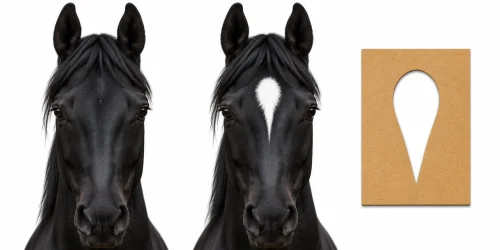
A simple way to brighten a horse’s plain head is by creating an attractive white star.
A well-placed star can make a remarkable difference to a horse’s appearance, drawing attention to the face and adding character and expression.
For a neat, consistent result, we prefer to use a stencil. We make our own from a piece of cardboard, cutting out the desired shape of the star. This allows us to reproduce the same marking each time.
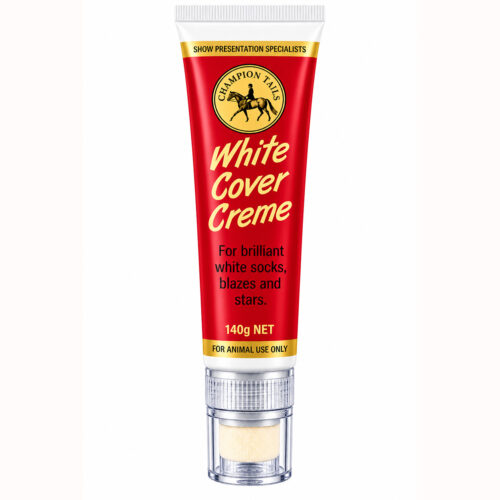
Using Champion Tails White Cover Crème in the convenient tube with sponge applicator, carefully position the stencil on the horse’s forehead and apply the crème evenly through the cut-out area.
Once the stencil is removed, gently soften and blend the edges with a toothbrush. This helps the marking blend naturally with the surrounding hair rather than leaving a sharp, painted outline.
The result is a beautiful, natural-looking star that can transform the appearance of an otherwise plain head.
A Little Showing Tip: Keep your cardboard stencil so you can recreate the same marking at every show.
Important: Before creating artificial markings, always check the rules and regulations of the relevant equestrian organisation, breed society or show governing body in your country. The use of cosmetic products and artificial markings may be restricted or prohibited in some competitions.
Hiding a Multitude of Hind End Faults
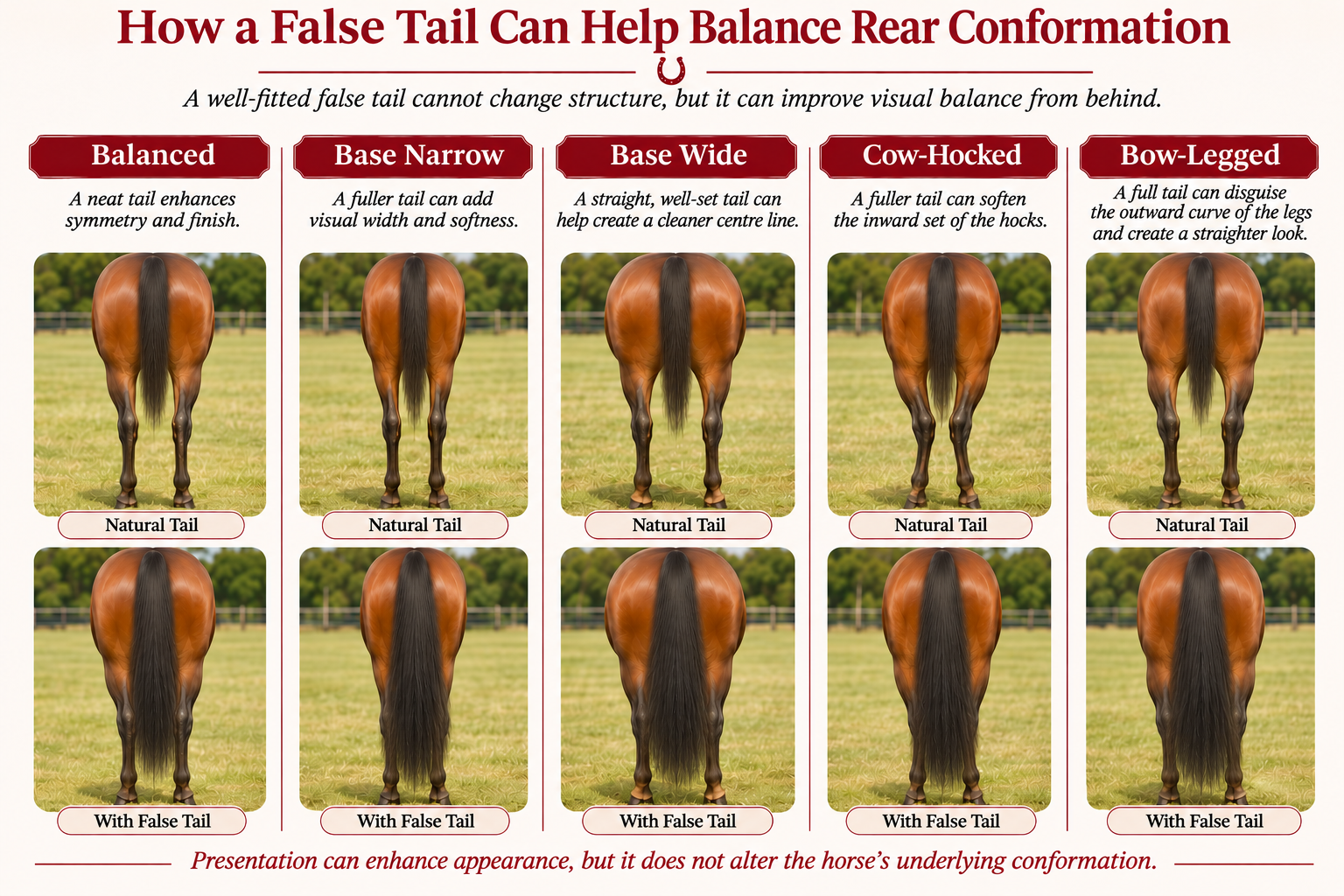
It is amazing how a beautiful, full tail can help disguise a multitude of conformation faults in a horse. Sometimes, something as simple as improving the appearance of the tail can make a remarkable difference to the overall picture.
Not every horse is blessed with perfect conformation or a naturally thick, luxurious tail. Some horses are narrow through the hindquarters, others are wide behind, while some may be cow-hocked or have other faults that become more noticeable when viewed from the rear.
A well-chosen false tail can work wonders in improving the visual balance of these horses. By adding fullness and length where needed, a false tail can draw the eye away from less desirable features and create a more pleasing, balanced appearance.
The more noticeable the fault, the more important the choice of tail thickness becomes. A horse with a relatively minor fault may need only a little extra fullness, while one with a more pronounced fault may benefit from a Double, Triple or even Quadruple thickness tail.
Of course, a false tail cannot change the horse’s actual conformation, but it can certainly change the way that conformation is perceived.
The secret is choosing a tail that complements the horse rather than simply selecting the biggest tail available. The finished result should look natural, suit the horse’s build and enhance the overall presentation.
After all, presenting a horse to its best advantage is what showing is all about!
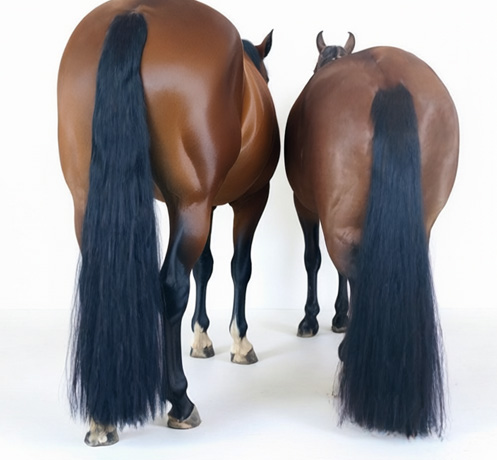
The Crowning Glory — A Beautiful Tail
Not every horse is blessed with a naturally thick, luxurious tail.
If yours is, congratulations! You’re one of the lucky ones.
For the rest of us, Champion Tails comes to the rescue!
We offer an extensive range of beautifully handcrafted false tails and tail extensions, available in different lengths and thicknesses to complement your horse’s build and presentation.
With 14 carefully selected horsehair colours, there’s an excellent range of shades to suit almost every horse.
And if you can’t find the perfect match, we also offer custom colour matching at no extra charge.
Our aim is simple: to give your horse a beautifully natural-looking tail that enhances its appearance and completes that winning show-ring presentation.
Because sometimes, the perfect finishing touch is right behind you!
Now for the Finish
The final touches can make all the difference when presenting your horse in the show ring.
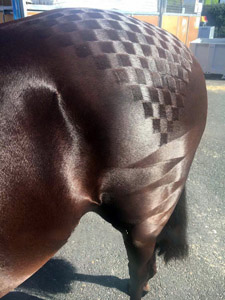
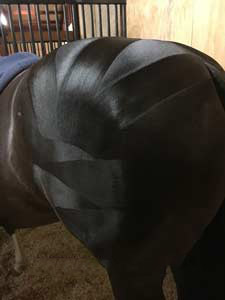
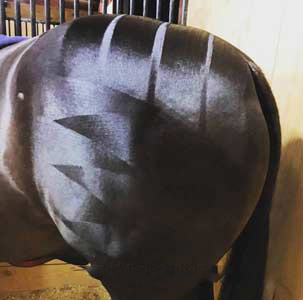
If your horse has a beautifully shaped rump, why not show it off? Add quarter marks, squares or decorative designs to the hindquarters, with shark’s teeth along the back of the flank. These finishing touches draw the eye to the horse’s best features and enhance its overall presentation.
Using Quarter Marks to Enhance Your Horse’s Hindquarters
The size, shape and placement of your quarter marks can make a surprising difference to the appearance of your horse’s hindquarters.
If your horse has a rump that slopes more than you’d like, consider finishing the quarter marks a little earlier, rather than extending them too far down the rump.
And remember, you don’t always have to follow the natural slope of the hindquarters!
When creating square quarter marks or traditional hunter stripes, experiment with keeping the design more level, extending it backwards in a straighter line rather than following the downward slope of the rump.
This can help create the visual impression of a more level, balanced outline through the hindquarters.
Creating That Gorgeous Apple Bum Finish
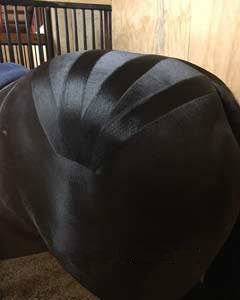
Once you’re happy with your quarter marks, it’s time for the finishing touch — that gorgeous, rounded apple bum look!
Take your brush and, starting at the top of your horse’s tail, brush in a sweeping arc down each side of the hindquarters.
This creates a beautifully polished finish while enhancing the appearance of those lovely, big, rounded hindquarters.
It’s a simple technique, but one that can make a wonderful difference to the overall presentation of your horse.
A Little Showing Tip
Don’t be afraid to experiment with different quarter-marking designs, sizes and positions. What looks wonderful on one horse may not be the most flattering choice for another.
The secret is to use your quarter marks and finishing techniques to complement your horse’s individual shape, rather than simply following the same pattern every time.
For example, a horse that is a little light through the rump may benefit from wider markings placed slightly lower, helping to create the impression of greater fullness and substance. Try different widths, shapes and positions until you find the design that best complements your horse’s conformation.
However, there’s a little secret to remember!
If your horse isn’t blessed with particularly attractive hindquarters, don’t automatically draw attention to them with elaborate designs. If you cannot find a pattern that improves their appearance, keep the coat beautifully clean, well brushed and neatly presented instead.
Sometimes, less really is more!
For Perfect Brilliant White Socks
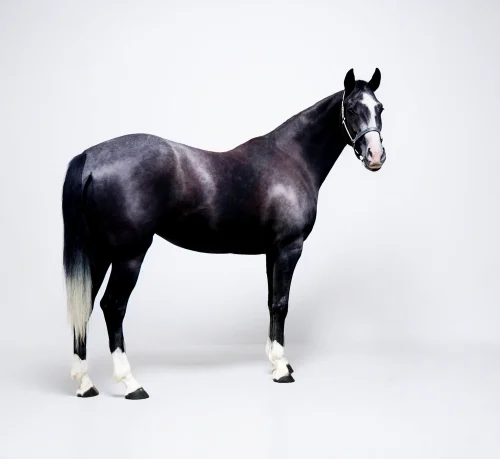
Beautifully brilliant white socks with a crisp, clean outline can make a remarkable difference to your horse’s presentation in the show ring.
And the secret to achieving that perfect finish? Start preparing several days before the show!
Firstly, clip your horse’s white socks a few days before the event to give them a lovely, neat appearance.
The Night Before the Show
Wash the white socks thoroughly, removing any dirt or stains.
While the socks are still damp, apply Champion Tails White Cover Crème, covering each sock completely and evenly.
Allow the crème to dry, then put your horse in the stable for the night. There’s no need to fuss over those white socks again until morning!
On the Morning of the Show
Give the socks a thorough brushing to bring up the beautifully white hair. If you feel they need a little extra coverage, reapply Champion Tails White Cover Crème where necessary.
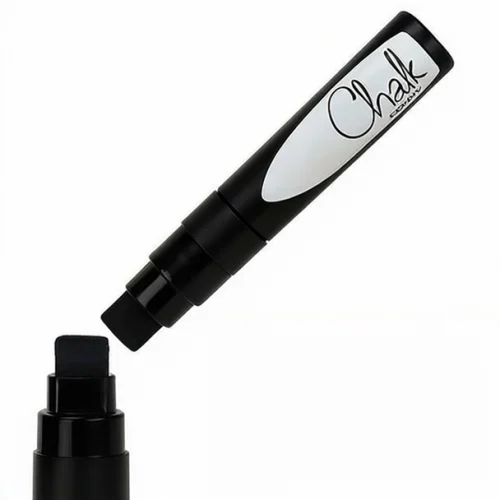
For the finishing touch, take a large black chisel-tip chalk pen and carefully outline the upper edge of each white sock, following its natural shape.
This darkens the stray pale hairs immediately above the white, creating a beautifully defined, crisp boundary between the white sock and the darker leg.
The result is a lovely, clean finish that makes those white socks really stand out!
A Little Showing Tip: Always follow the natural outline of the sock rather than trying to straighten or reshape it.
Important: Before using cosmetic colouring products or artificial markings, check the rules of the relevant breed society, showing organisation and competition.